

The INCLUDES project meeting in Prague focused on physical accessibility in transport, bringing together experts to share Czech practices and inspiration from across Europe.
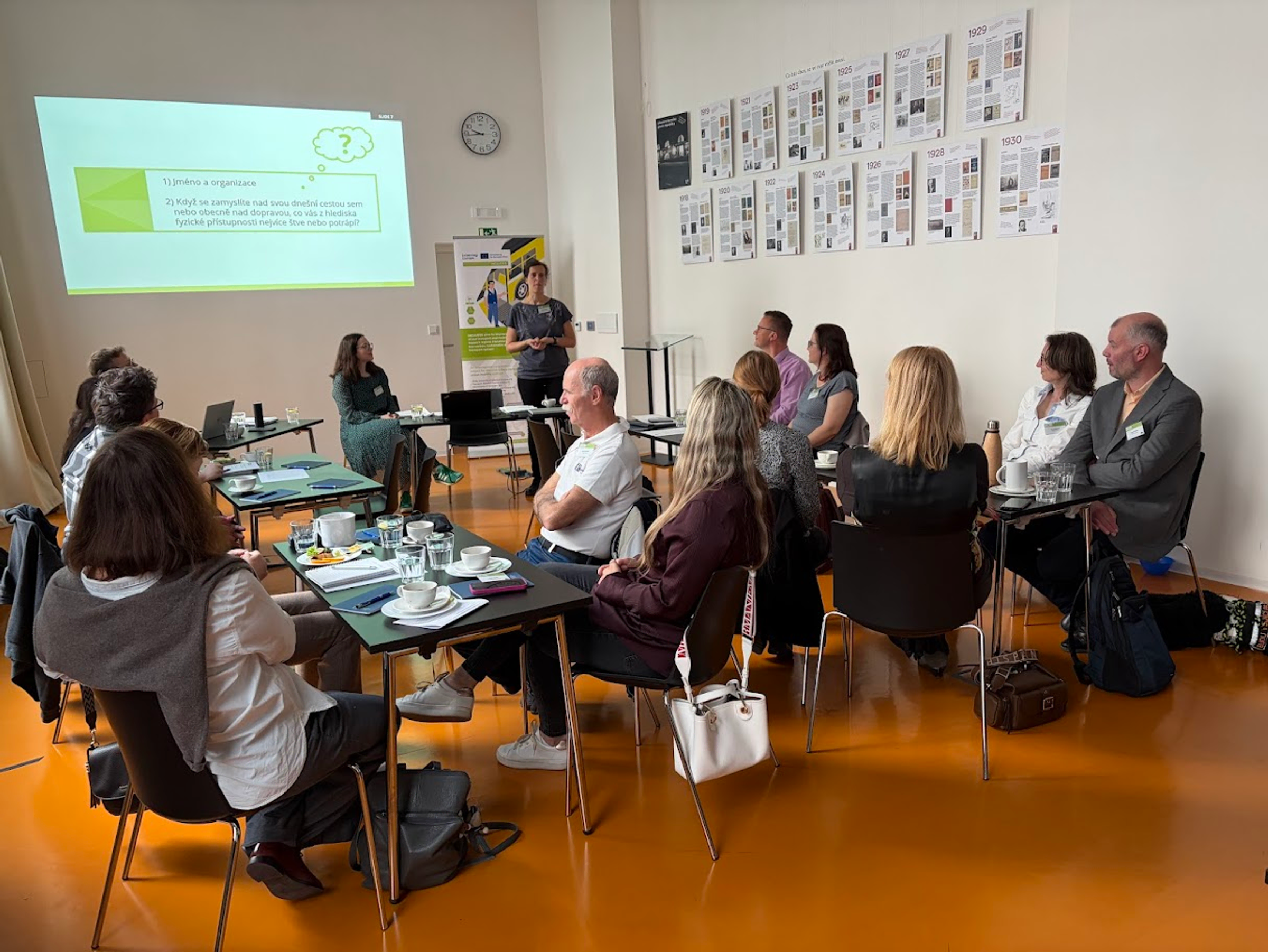
On 21 April 2026, we hosted the second regional meeting of the INCLUDES project in Prague. The event brought together 18 participants representing the Ministry of Transport, transport organisations, organisations of persons with disabilities, and research institutions.
Together, we discussed the project’s first thematic focus: physical accessibility in transport.
Three Czech good practices were presented:
-
Bezva doprava (ROPID) – a specialised transport service for people with severe disabilities in Prague and the Central Bohemian Region,
-
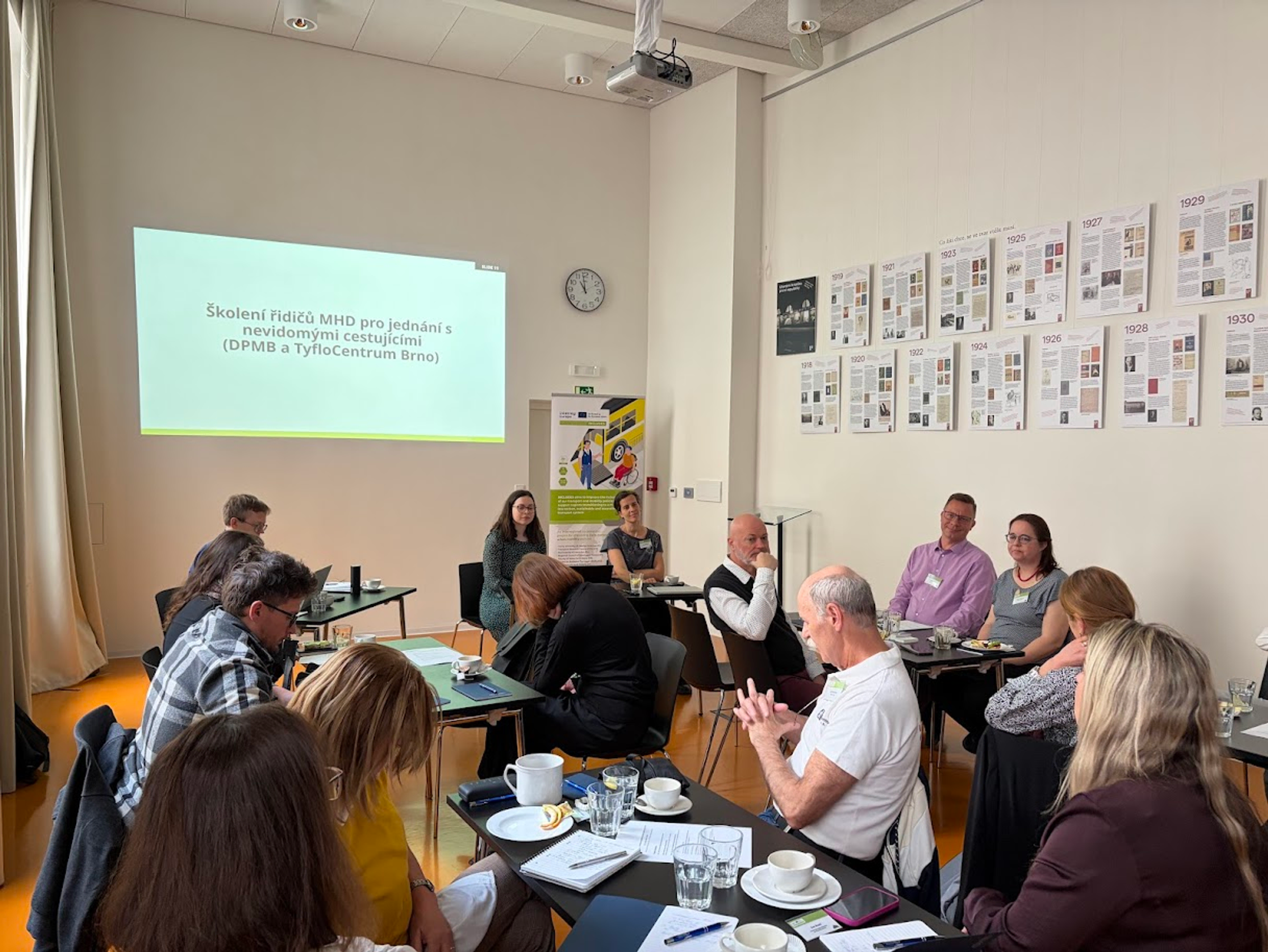
Training for public transport drivers in communication with visually impaired passengers (DPMB in cooperation with TyfloCentrum Brno),
-
Mapping barrier situations and solutions for passengers with sensory impairments (Masaryk University and DPMB, TA CR project).
From partner regions, two case studies with strong potential to inspire the Czech context were discussed in detail: Finnish “walk-along” studies, focusing on real-life user experience of accessibility and the implementation of the PEBA (Plan for the Elimination of Architectural Barriers) in Bologna.
Key points from the discussion included:
-
Formal compliance with accessibility standards does not always guarantee real accessibility in practice.
-
Co-creation with people who have lived experience is essential – whether through structured audits or long-term partnerships.
-
Walk-along studies provide valuable user feedback, but formal documents require comprehensive audits carried out by trained accessibility experts, who are currently in short supply.
-
Awareness and staff training are most effective when based on direct experience, such as “try-it-yourself” formats.
The outcomes of the workshop will contribute to further materials and dialogue with the Ministry of Transport. The next workshop, planned for the second half of the year, will focus on digital accessibility.
We would like to thank all participants for an open and inspiring discussion.
More about the project
-2400w.webp)